Today is not just another Thursday. It’s Juneteenth. A day that marks freedom finally getting to the enslaved Black Americans in Galveston, Texas, two and a half years after the Emancipation Proclamation was signed. Two and a half years! Let that sink in for more than a moment. So when you hear people say it’s a celebration, now you understand.

I was born and raised in London, England, to parents with Ghanaian roots, so learning about the reason for this national American holiday brought both horror but ultimately joy in the power of Black Americans. Through my discovery, and it’s been over some years, I found Juneteenth was actually one of many emancipation celebrations. But Juneteenth, in particular, became a national holiday due to the Poor People’s March back in 1968, part of the civil rights movement.
In a June 17, 2018 interview with Inside Edition, Dr. Lori Brooks, a Fordham University professor, explained:
“Juneteenth became a national celebration because of the Poor People’s March in 1968. The Poor People’s March was a sort of second arm of the civil rights movement. After Martin Luther King’s assassination, Reverend Ralph Abernathy led the Poor People’s Campaign and protest in Washington, D.C. And because it wasn’t going too well—there was a lot of infighting, leadership conflict, and tension with the federal government—they needed to end the campaign on a high note. So, they decided to celebrate the 19th of June, Juneteenth, as a sort of commemorative event. It also became a way to cap off the Poor People’s occupation of the National Mall in Washington [D.C.]. Juneteenth then spread through the country as campaign members returned to their homes and started local Juneteenth celebrations.”
I’m not just thinking about my two beautiful daughters born on these very shores, but also about my amazing U.S. friends, whose resilience, representation, education, family, and big hearts reflect everything this holiday stands for. It shows in their spirit, daily. This is their history, too. So yes, this one is personal.
Juneteenth isn’t just about American history, it’s about legacy. A freedom fought and won that needs to be celebrated and always protected.
If you’re new-ish to Juneteenth (like me) or still learning (we all start somewhere), there are many ways to go deeper besides reading a thousand books or watching a hundred documentaries, though those aren’t bad starts. If you’re in the DMV area, a visit to the Smithsonian’s National Museum of African American History and Culture is, to me, a must. When it first opened, my family of four jumped on the waiting list for tickets and we were not disappointed. You won’t be able to take it all in at once, but for a clear, respectful breakdown of Juneteenth’s roots and meaning, grounded in the depth and richness of the Black experience in America, you really shouldn’t skip it.
Juneteenth is A Celebration
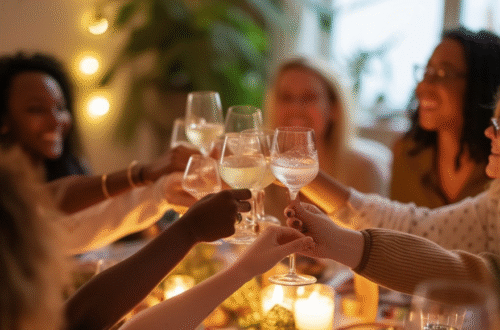
That’s a big yes. And while many parades and festivals are planned across towns, cities, and states, plus virtual summits and everything in between, for some, the mood has somewhat shifted. Through various media, I’ve heard that some organizations who had initially scheduled events have now canceled them. Still, this setback won’t shut it down. Hell no! The vibes and energy are too strong among supporters of all beautiful backgrounds.
If this isn’t a reminder to keep going, to keep doing the work internally, systemically, through choices and in conversations with those open to hearing and willing to understand, then I don’t know what is. In all ways, let’s lift, listen, and learn. And with my girls always in my mind, I intend to do just that.